
Daniel Ortega said what dictators rarely say aloud: “There will be no more elections.”[1] If his authoritarian career has proved anything, it is that he keeps his word. A regime that stops disguising its conduct has calculated that disguise is unnecessary, and that calculation is information worth reading.
Nicaragua did not abandon elections in July 2026; it has been abandoning them since Ortega returned to power in 2007. His opponents were already excluded, many exiled and stripped of nationality, and since 2021 no party able to contest power has retained legal status.[2] The announcement was pre-emptive: the closing of any opening he alone treats as a risk. Three days later, Rosario Murillo softened it to “elections, yes, but our own”,[3] and Gustavo Porras, president of the National Assembly, contradicted himself twice in one week about what Ortega had meant.[4] The contradiction confirms the announcement rather than diminishing it.
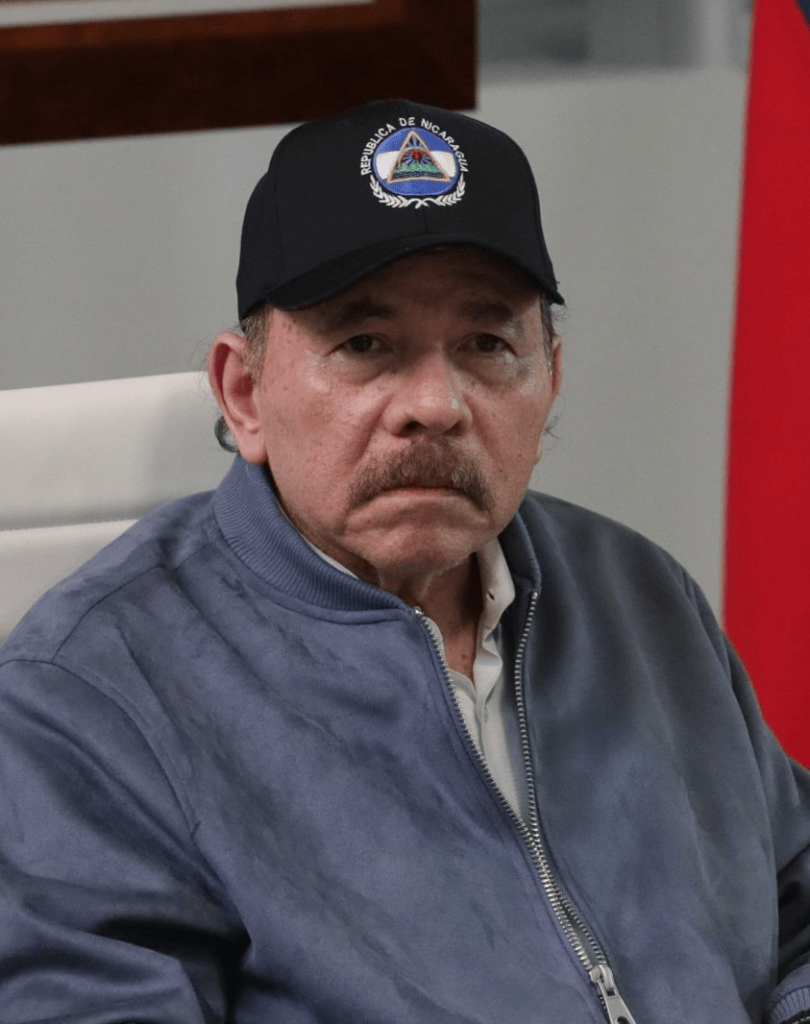
Daniel Ortega has ruled Nicaragua without interruption and gutted its democratic institutions since 2006 (Image: Wikimedia Commons)
Saying there will be no elections opens the door to the continuation of familiar fraud. It may mean abolishing the mechanism altogether or replacing it with another way of organising power. Eliseo Núñez has raised the possibility of a turn towards Chinese-style democratic centralism and argues that the announcement creates a fait accompli: if pressure ever forces the regime to negotiate, the starting point will not be free elections but their absence. With Ortega, the extreme hypothesis has proven true more than once.[5]
I. Before the vote
Elections are hollowed out when a regime decides it no longer needs what they provide. A dictator holds them because they supply a facade of popular origin no coup can offer, reveal the shape of his base, and distribute office and loyalty.[6] That explains why Ortega did not abolish the vote in 2011, 2016 or 2021. What changed in 2026 is that the calculation is nearing its end.
The damage lies less in how people vote than in who may compete. Andreas Schedler argues that authoritarian elections are contested ground on which both sides weigh costs and benefits, not empty theatre.[7] In Nicaragua, that ground narrowed until it vanished. Elsewhere, such elections have sometimes pushed towards institutional opening, obliging a regime to fix the rules and tolerate uncertainty.[8] Nicaragua learned to hold elections that open nothing, settling the uncertainty before the campaign begins.
V-Dem, which measures democratic quality worldwide, shows where the damage sits. In 2025, Nicaragua ranks among the worst five per cent of countries on opposition autonomy and on how easily a party can be banned, but only in the bottom twenty-one per cent on whether polling day itself was clean.[9] Beatriz Magaloni explains why a rational autocrat settles the contest before election day rather than tamper with the count in front of witnesses.[10] Ballot-box fraud is visible and costly; excluding the competitor months earlier is cheaper and leaves fewer traces.
Ortega has taken that calculation to its limit, not only legally. Since 2008, he has stripped one opposition party after another of legal status, until by August 2021 none capable of competing remained; in the months before, at least six presidential hopefuls were jailed.[11] Pippa Norris argues that electoral integrity is measured throughout the entire electoral cycle, not on polling day alone.[12] The months of rewritten laws, annulled candidacies and imprisoned rivals are as much part of the process as the count, and that is where the regime concentrates its fire.
On opposition autonomy, Nicaragua’s nearest neighbours in V-Dem are not Cuba or Venezuela but Turkmenistan and North Korea. Venezuela scores worse on polling-day irregularities because Maduro still had to manipulate the actual count against an opposition that was still competing; Nicaragua scores worse on the exclusion of that opposition. One manipulated the competition; the other eliminated it.
II. The law in excess and the law in deficit
By the time Ortega spoke, a law had already produced that outcome. Law 1242, passed in March 2025, repealed the previous electoral law and rewrote the rules. Cancelling a party’s legal status had required fixed deadlines, a hearing, and a right of appeal, though these requirements were poorly observed. The new law widened standing to any citizen and abolished all three. Anyone may accuse; the accused cannot answer; and the decision cannot be challenged.[13]
Javier Corrales calls this autocratic legalism: a mechanism that combines the use, the abuse, and the non-use of law in the service of executive power. Use exploits legislative and judicial control to pass authoritarian legislation through formal channels, as Law 1242 does by turning a forthcoming exclusion into procedure. Abuse is the partial and inconsistent application of the law, as the Constitutional Chamber did in 2009 by declaring the ban on re-election inapplicable without repealing it.[14] Non-use, which Corrales calls paradoxical, is direct reliance on illegality, violating rules rather than amending them.[15] The regime has travelled all three.
Ortega has repeatedly reworked the constitutional and electoral framework since his 2000 pact with Arnoldo Alemán. What distinguishes recent years is the pace: the 2009 ruling on re-election, its extension in 2010, the 2014 reform that formalised indefinite re-election, and the 2025 one that created the co-presidency. A law amended that is often too small for the power using it, and that power expands whenever it finds a limit not yet closed.[16]
On 28 July the Assembly referred the enabling bill to a special committee. Its three planks, trailed by Porras, are a presidential term of seven renewable years instead of six, constitutional rank for the disqualification of candidates linked to the 2018 protests, and explicit power for the Electoral Council to refuse legal status to parties trying to register them. The last two were already in the 2025 reform and in Law 1242; all that is added is a year in office.[17]
Non-use, at its most direct, is physical repression, documented for more than two decades before these reforms. In 2018, it turned massive, with hundreds killed during that year’s protests. Autocratic legalism does not replace that violence but absorbs it as its extreme form, the point at which the regime drops even the pretence of amending the law.[18]
The regime is neopatrimonial: power is exercised as personal and family property rather than through impersonal institutions. It has sultanistic traits, an even more extreme form in which limits on the ruler’s will vanish and personal patrimony and the state become indistinguishable. Its vocation is totalitarian insofar as it seeks to control social and religious life as well as political power, as the dissolution of thousands of civic organisations since 2018 and the persecution of the churches show. Ortega and Murillo have also built a conjugal and, by every indication, dynastic project, made explicit by the 2025 co-presidency. The only comparable codification is Azerbaijan, where Ilham Aliyev made his wife first vice-president in 2017, a hierarchical rather than an equal arrangement. Nicaragua went further, faster, and with formal parity.[19][20][21][22][23]
All this rests on an institution that still administers elections with some technical competence, and only because it answers to nobody but the governing party. V-Dem shows the Supreme Electoral Council’s capacity has declined only slightly since 1990, reaching its lowest point in 2016, while its autonomy from the executive has all but disappeared. The Ortega-subservient body arbitrates no contest, because none remains. It certifies a result settled before the process begins.
III. The uncertainties of the Ortega-Murillo regime
Some in the opposition refuse to keep demanding elections for fear of legitimising the dictatorship. Yet, as The Economist has argued, democrats under regimes that rig the vote should not stop demanding them, because abandoning the demand hands the autocrat his last claim to govern by consent.[24] Insisting is not naivety but a route that has repeatedly opened a crack where a regime believed everything was sealed.
Nicaragua need not look abroad for the lesson. In 1990, under a Sandinista government confident of victory, Violeta Barrios de Chamorro defeated Ortega at the polls. The elections were imperfect but competitive enough to produce alternation. In 2011, the route was narrower but still open. Fabio Gadea Mantilla stood against an Ortega who already held power and the machinery, and lost with roughly a third of the vote, according to international observers, against the 62.46 per cent reported for Ortega. The Inter-American Court of Human Rights later found Nicaragua in violation of Gadea’s political rights: winning that way carried a cost. Ten years on, Ortega did not risk litigation and jailed the candidates before the vote. He would have preferred them to withdraw and spare him visible repression; their insistence forced his hand. What suits him best today is an opposition that stops demanding what he fears most.[25][26]
Ortega knows the risk of elections not from other dictators but from himself: he lost once and has governed ever since with that defeat in mind. Venezuela is a different precedent: the blatant fraud of 2024, after a campaign in which the opposition, led by María Corina Machado and Edmundo González Urrutia, showed overwhelming support despite persecution, left Maduro’s international legitimacy exhausted and helps explain the United States’ operation in January 2026 that ended with his capture and transfer to a New York court. For Ortega, closing the electoral route entirely is the surest way to ensure it never happens to him.[27][28]
Add to that calculation a further consideration: Ortega does not feel ready to compete in the near term, not even on his own terms, in 2026 or 2027. The pattern is already evident. When the 2025 reform extended the presidential term from five to six years, the more legalistic reading assumed the extra year would benefit the next mandate rather than the current one; it became clear that it did not, and that the year was absorbed into the term Ortega was already serving. If the same logic repeats, the added year will not shift to the next term; it will extend the one he already holds, and 2027 will be as compromised as 2026 already was.
It is also worth asking what the word “renewable” conceals in the 28 July bill. Nothing requires it to mean renewal through an election contested against other candidates; the term equally admits a different mechanism, such as a referendum or renewal decided by the National Assembly itself, which in practice would avoid any real competition.
That same logic of postponement may explain why the date that would suit him best is not 2027 but 2028. Washington under Trump currently focuses on Nicaragua: an issue Ortega would rather avoid while pressure on Managua remains high. 2028, by contrast, coincides with the US presidential election itself, a period when Republicans and Democrats alike would be absorbed by their own contest and less inclined to press Managua. So far, there is no documentary evidence that the regime has framed it this way, and the reading may prove wrong. Nonetheless, it fits the logic already described: Ortega calculates not only the domestic risk of an undemocratic step, but also the moment in the international calendar when taking it costs him least.
That closure answers to more than one will. Milan Svolik distinguishes two problems facing every authoritarian ruler: sharing power with allies who may conspire if their share shrinks, and controlling an excluded population that may rebel if discontent grows.[29] Ortega solved the second years ago through sustained repression and the dismantling of independent social organisation; the announcement suggests the first is now what concerns him.
Not everyone in the FSLN shares the same calculation. Jason Brownlee calls this the prince’s problem: in dictatorships attempting hereditary succession, the designated heir is suspected of lacking legitimacy of his own and survives only if the elite waits its turn. Rosario Murillo and her children, including Laureano Ortega, lack the revolutionary legitimacy Ortega retains from fighting Somoza and the Contras. They need electoral competition to end before the succession, because an open election would expose that absence. Others in the coalition would rather keep enriching themselves under a less isolated regime and would view a controlled opening more calmly than total closure. Coalitions of this kind rest on material benefit rather than conviction, and agreements of convenience break when keeping them costs more than breaking them.[30]
Porras’s three versions in a week, first that there would never again be elections, then that there would be elections under a new framework, then that Ortega had never said the first thing, were not a communications failure. They were the clearest signal that the regime has no single answer to how far to go, and that the announcement was meant as much to settle internal doubt as to discipline the opposition. On 19 July 2026 Ortega did not announce a change of course. He confessed, aloud and without need, what his regime had spent more than a decade building by other means: the law, its constant reform, and, where the law fell short, direct repression of anyone who represented a risk.
What Nicaragua needs are elections that genuinely put power back in contention, preceded by reforms that restore the opposition’s right to compete, make the Supreme Electoral Council independent, and bring back domestic and international electoral observation. The difference between democratising elections and the autocratising ones Ortega has built, which ratify a result already decided, separates a country that can still correct its course from one that continues its descent. The bodies that have observed the Nicaraguan electoral system for decades already hold the recommendations needed to determine which reforms to demand. What is missing is not diagnosis but the will to demand them, because, as Nicaragua showed in 1990, even a regime that believes itself invincible can lose if it is challenged, even by the route it controls.
Douglas Castro-Quezada is a doctoral candidate in Area Studies (Latin America) at the University of Oxford.
[1]“Daniel Ortega sepulta la democracia como vía de cambio político en Nicaragua,” Divergentes, 20 July 2026, https://www.divergentes.com/daniel-ortega-sepulta-democracia-como-via-de-cambio-politico-nicaragua/.
[2]Group of Human Rights Experts on Nicaragua, Report of the Group of Human Rights Experts on Nicaragua, A/HRC/58/26, Human Rights Council, 26 February 2025, https://www.ohchr.org/sites/default/files/documents/hrbodies/hrcouncil/grhe-nicaragua/a-hrc-58-26-auv-en.pdf.
[3]“Copresidenta Rosario: reformas electorales fortalecerán la soberanía y garantizarán elecciones diseñadas por el pueblo nicaragüense,” Diario Barricada, 22 July 2026, https://diariobarricada.com/destacadas/copresidenta-rosario-reformas-electorales-fortaleceran-la-soberania-y-garantizaran-elecciones-disenadas-por-el-pueblo-nicaraguense/.
[4]“‘No van a volver a haber elecciones’: Presidente de la Asamblea de Nicaragua confirma reforma contra el voto libre,” Infobae, 22 July 2026, https://www.infobae.com/nicaragua/2026/07/22/no-van-a-volver-a-haber-elecciones-presidente-de-la-asamblea-de-nicaragua-confirma-reforma-contra-el-voto-libre/.
[5]Eliseo Núñez, interviewed by Óscar Estrada, “+CONSCIENTES,” ICN, YouTube video, 21 July 2026, https://www.youtube.com/watch?v=s_5OVmGf3U4; “‘Ortega se ha quitado una máscara más,’ dijo Juan Sebastián Chamorro desde el exilio tras el anuncio sobre cese de elecciones en Nicaragua,” Infobae, 20 July 2026, https://www.infobae.com/nicaragua/2026/07/20/ortega-se-ha-quitado-una-mascara-mas-dijo-juan-sebastian-chamorro-desde-el-exilio-tras-el-anuncio-sobre-cese-de-elecciones-en-nicaragua/.
[6]Jennifer Gandhi and Ellen Lust-Okar, “Elections Under Authoritarianism,” Annual Review of Political Science 12 (2009): 403-422.
[7]Andreas Schedler, ed., Electoral Authoritarianism: The Dynamics of Unfree Competition (Boulder: Lynne Rienner, 2006).
[8]Staffan I. Lindberg, “The Surprising Significance of African Elections,” Journal of Democracy 17, no. 1 (2006): 139-151.
[9]V-Dem Institute, “V-Dem Dataset v16” (University of Gothenburg, 2026), https://www.v-dem.net/data/the-v-dem-dataset/.
[10]Beatriz Magaloni, “The Game of Electoral Fraud and the Ousting of Authoritarian Rule,” American Journal of Political Science 54, no. 3 (2010): 751-765.
[11]Organization of American States, Informe: Elecciones Generales en Nicaragua 2021 (Washington, D.C.: OAS, 2021), https://www.oas.org/fpdb/press/Informe-Nicaragua-Elecciones-2021.pdf.
[12]Pippa Norris, Why Electoral Integrity Matters (New York: Cambridge University Press, 2014).
[13]Nicaragua, Ley n.º 1242, Ley Electoral, La Gaceta, no. 46, 10 March 2025, Consejo Supremo Electoral, https://cse.gob.ni/es/documentos/marco-juridico-vigente/ley-ndeg-1242-nueva-ley-electoral.
[14]Nicaragua, Sala Constitucional, Corte Suprema de Justicia, Sentencia n.º 504, 19 October 2009.
[15]Javier Corrales, “Autocratic Legalism in Venezuela,” Journal of Democracy 26, no. 2 (2015).
[16]Sentencia n.º 504, 19 October 2009; Nicaragua, Ley n.º 854, constitutional reform, La Gaceta, 10 February 2014; Nicaragua, Ley n.º 1234, constitutional reform, La Gaceta, no. 32, 18 February 2025.
[17]Confidencial, “Asamblea ‘consultará’ mandato de “7 años renovables” para Ortega y Murillo,” 28 July 2026, https://confidencial.digital/noticias/proyecto-reforma-constitucion-politica-nicaragua-2027/; Expediente Público, “Daniel Ortega busca blindar su poder con mandatos de siete años renovables,” 29 July 2026, https://www.expedientepublico.org/daniel-ortega-busca-blindar-su-poder-con-mandatos-de-siete-anos-renovables/.
[18]Group of Human Rights Experts on Nicaragua, Report of the Group of Human Rights Experts on Nicaragua, A/HRC/58/26, Human Rights Council, 26 February 2025, https://www.ohchr.org/sites/default/files/documents/hrbodies/hrcouncil/grhe-nicaragua/a-hrc-58-26-auv-en.pdf.
[19]Kai M. Thaler, “Nicaragua: A Return to Caudillismo,” Journal of Democracy 28, no. 2 (2017); Salvador Martí i Puig et al., “Autocratización a fuego lento: el caso de Nicaragua (2000-2024),” Colombia Internacional, 2025.
[20]H. E. Chehabi and Juan J. Linz, eds., Sultanistic Regimes (Baltimore: Johns Hopkins University Press, 1998).
[21]Human Rights Watch, World Report 2024: Nicaragua (New York: HRW, 2024), https://www.hrw.org/world-report/2024/country-chapters/nicaragua.
[22]Nicaragua, Ley n.º 1234, constitutional reform, La Gaceta, no. 32, 18 February 2025.
[23]“Azerbaijan: President Appointed His Wife as First Vice-President,” Global Legal Monitor, Library of Congress, 24 March 2017, https://www.loc.gov/item/global-legal-monitor/2017-03-24/azerbaijan-president-appointed-his-wife-as-first-vice-president/.
[24]The Economist, “When a President Stops Pretending That Voters Count, Disaster Beckons,” 21 July 2026, https://www.economist.com/leaders/2026/07/21/when-a-president-stops-pretending-that-voters-count-disaster-beckons.
[25]Jennifer McCoy, “Nicaragua’s Transition: Elections and the Roots of Democracy,” Journal of Interamerican Studies and World Affairs 34, no. 2 (1992).
[26]Confidencial, “Corte IDH condena a Nicaragua por uso abusivo del poder para reelegir a Daniel Ortega,” January 2025, https://confidencial.digital/politica/corte-idh-condena-a-nicaragua-por-uso-abusivo-del-poder-para-reelegir-a-daniel-ortega/.
[27]“REACTION: Maduro Declared Winner of Venezuela’s Disputed Election,” Americas Quarterly, 2 August 2024, https://americasquarterly.org/article/reaction-maduro-declared-winner-of-venezuelas-disputed-election/.
[28]“Escoltado y esposado, Nicolás Maduro llega a Nueva York tras ser capturado por EE. UU.,” France 24, 3 January 2026, https://www.france24.com/es/am%C3%A9rica-latina/20260103-reportan-multiples-explosiones-y-sonidos-de-aeronaves-en-caracas.
[29]Milan W. Svolik, The Politics of Authoritarian Rule (New York: Cambridge University Press, 2012).
[30]Jason Brownlee, “Hereditary Succession in Modern Autocracies,” World Politics 59, no. 4 (2007); Dan Slater, Ordering Power: Contentious Politics and Authoritarian Leviathans in Southeast Asia (New York: Cambridge University Press, 2010); Eva Bellin, “The Robustness of Authoritarianism in the Middle East,” Comparative Politics 36, no. 2 (2004).
 Oxford Review of Latin American Studies
